At the Meeting of the Academic Council – Strategic Steps of the University into the Future
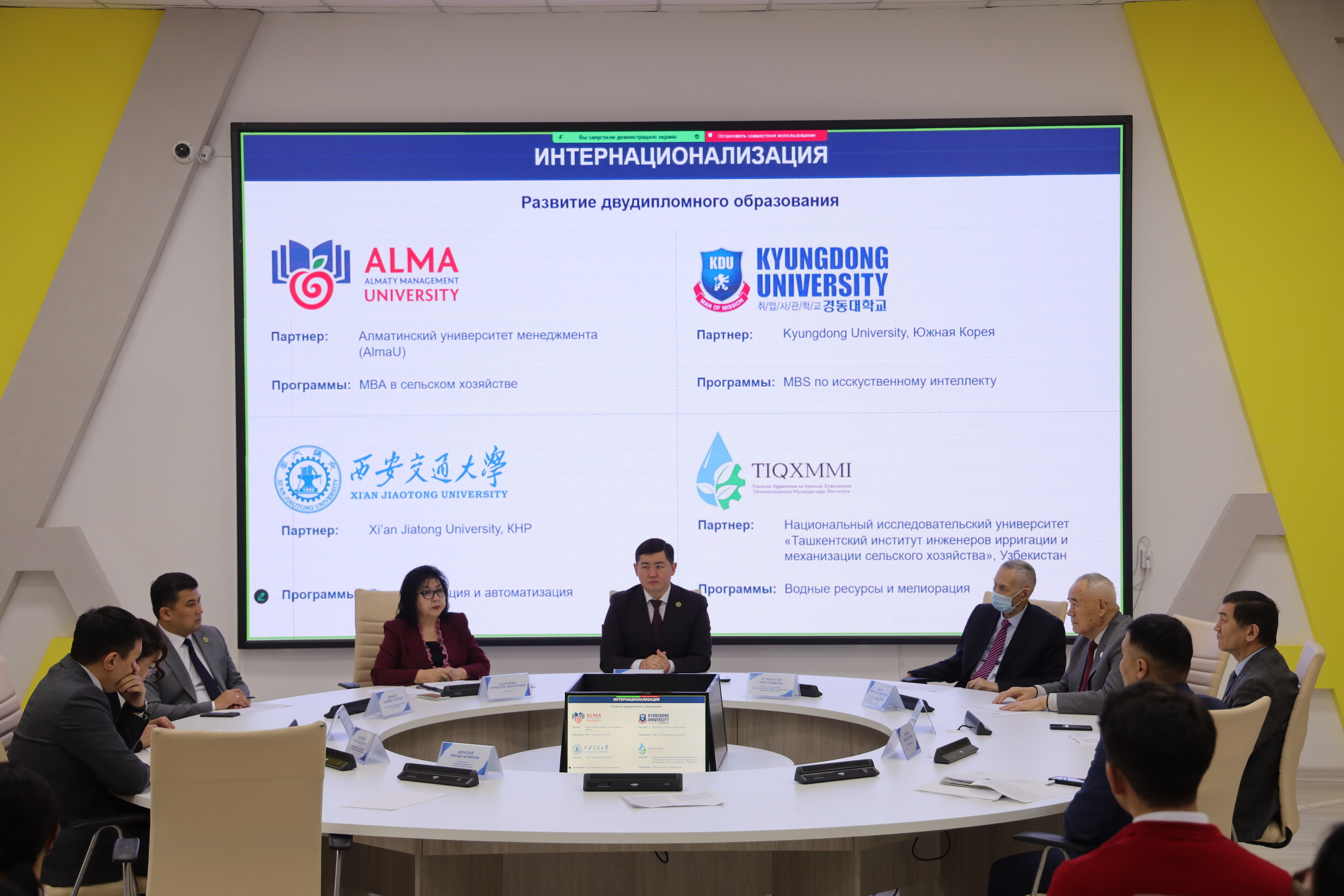
Today, a regular meeting of the Academic Council of Shakarim University was held, during which current issues related to the development of the institution were thoroughly discussed. The main topics included enhancing research activities, improving the quality of education, and expanding international cooperation. As a result of the meeting, important decisions aimed at the strategic development of the university were adopted.
In his report, Vice-Rector for Internationalization and Innovation Yerasyl Dulatbay presented a development plan for internationalization and innovation activities for the 2025–2026 academic year. He provided detailed information about the operations of the new workshops and modern laboratories of the Shakarim Lab research center. In addition, he highlighted results in commercialization and investment attraction, successes in the adaptation of drought-resistant potato varieties at the AgroBioExperimental Station, as well as achievements in strengthening international partnerships. At the same time, existing shortcomings and areas requiring further improvement were openly addressed. Special emphasis was placed on the need to take concrete measures to resolve these issues and continue enhancing the university’s scientific potential.
Vice-Rector for Strategy and Social Development Askar Kasymov analyzed the university’s performance in national and international rankings, outlining tasks for strengthening its position. According to him, high-quality education, increased effectiveness of scientific research, and international experience-sharing are crucial for improving the university’s prestige. In this regard, special attention will be given to enhancing the professional level of the faculty, increasing the number of scientific publications, and encouraging greater student involvement in research activities.
During the session, the Academic Council reviewed the university’s strategic steps aimed at future development. Council members also focused on supporting young scientists, creating conditions for their professional growth, and improving the qualifications of research personnel. It was especially emphasized that student involvement in research activities is of paramount importance, serving as the foundation for the university’s future scientific potential.
The decisions made during the meeting set a clear direction for the university’s further development. The implementation of innovative projects, deepening of international scientific cooperation, and increased engagement of students and young researchers in scientific work are all intended to enhance the university’s competitiveness and strengthen its position in the global educational space. Council members actively shared their suggestions and opinions, contributing to the discussion of each issue.
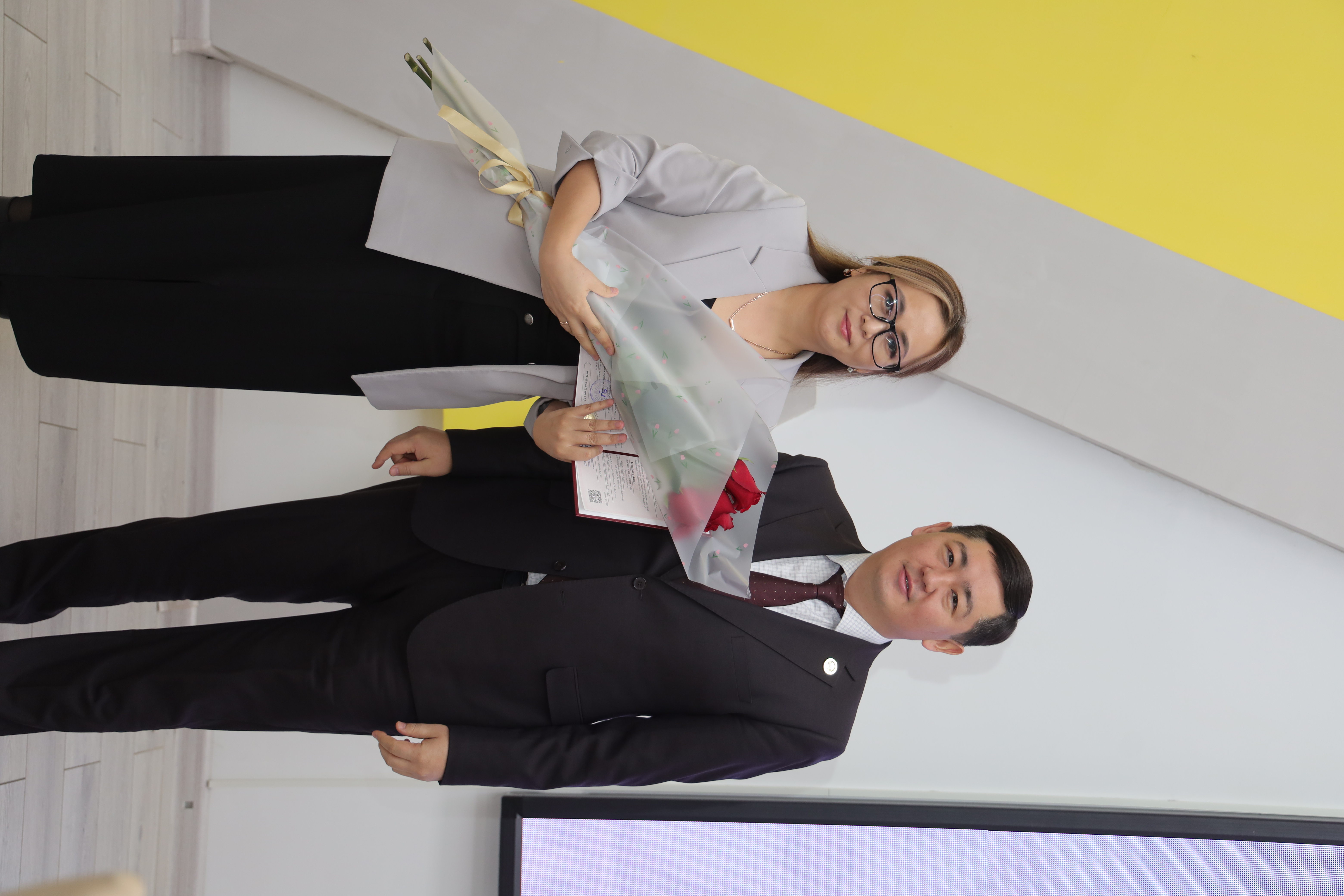
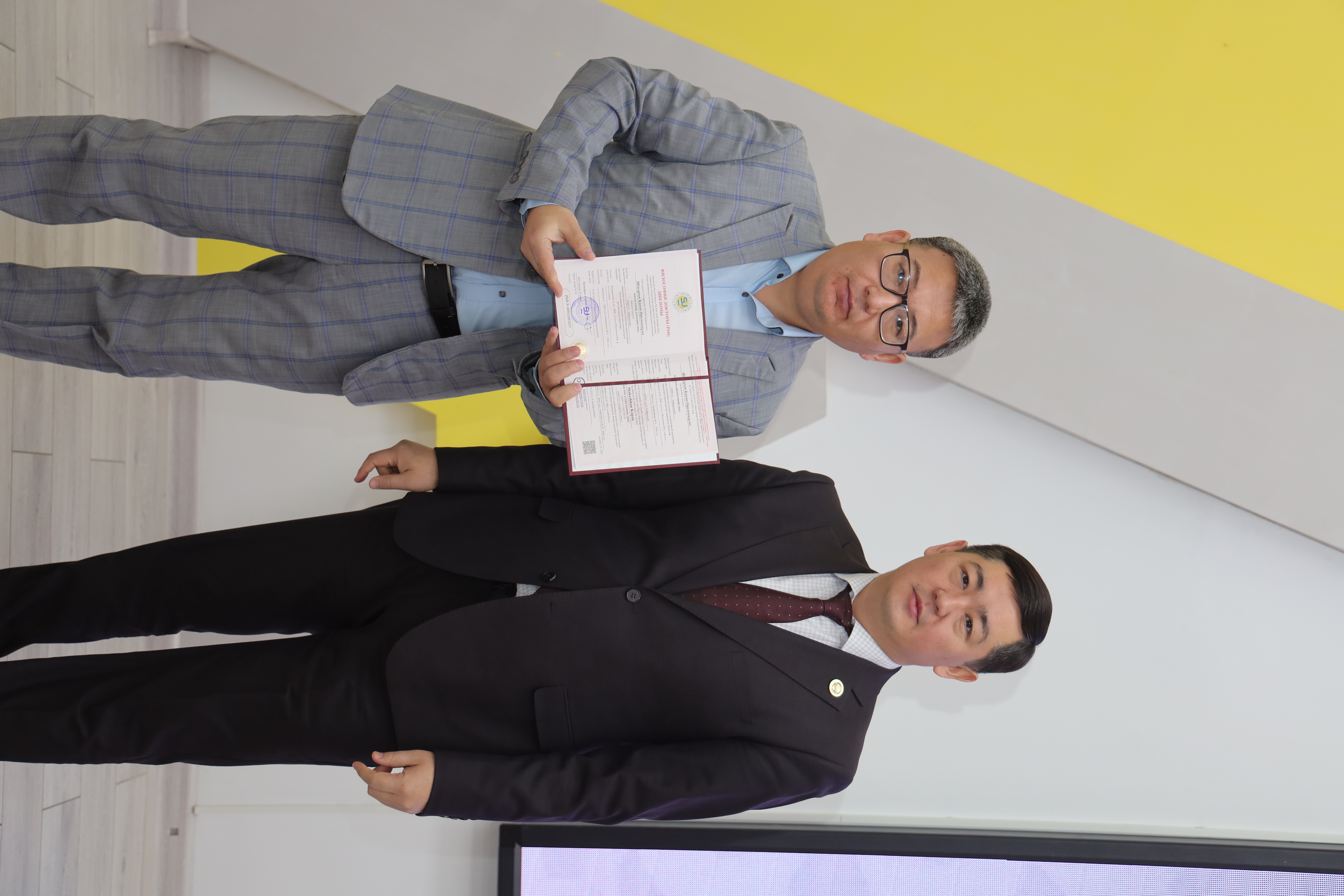
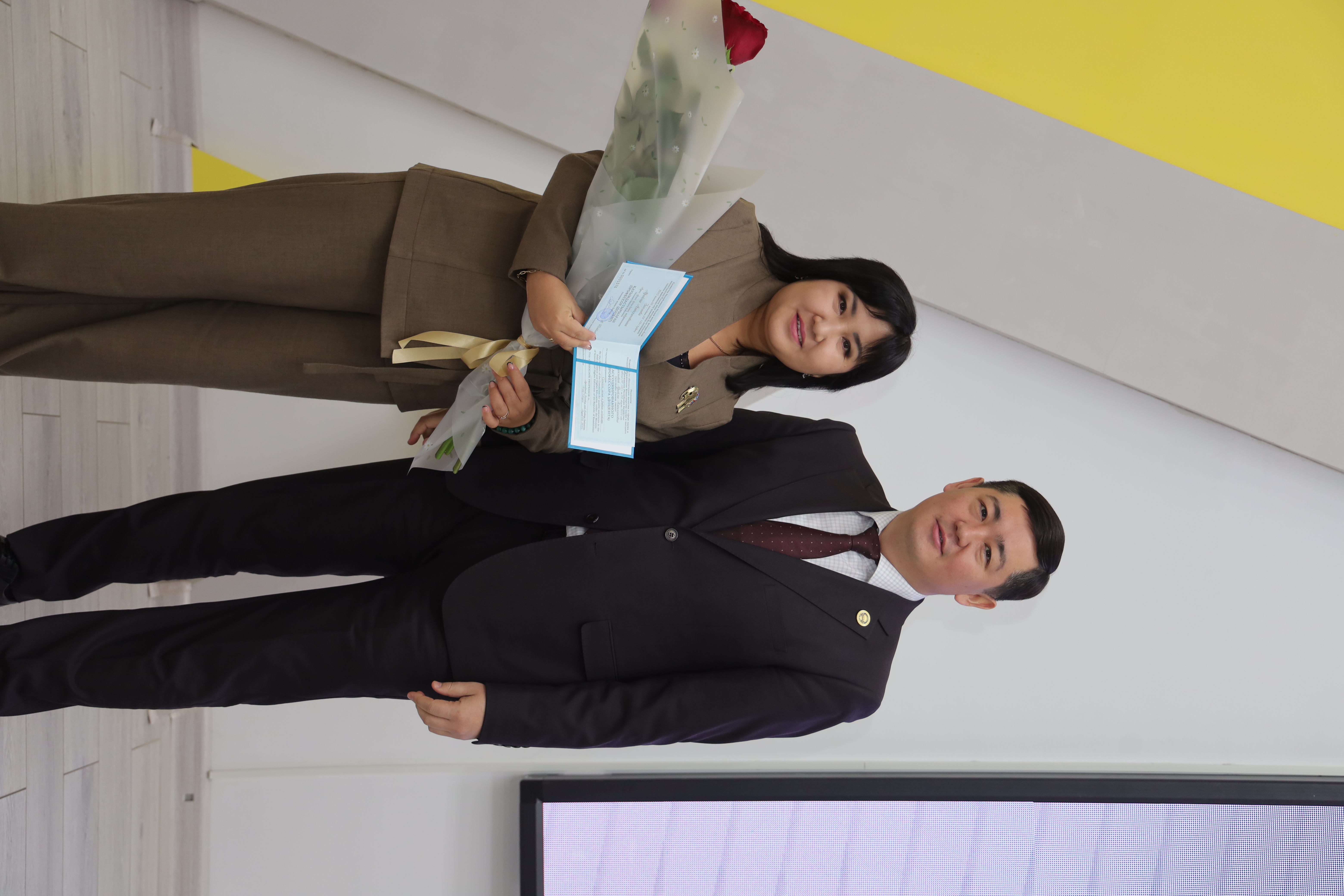
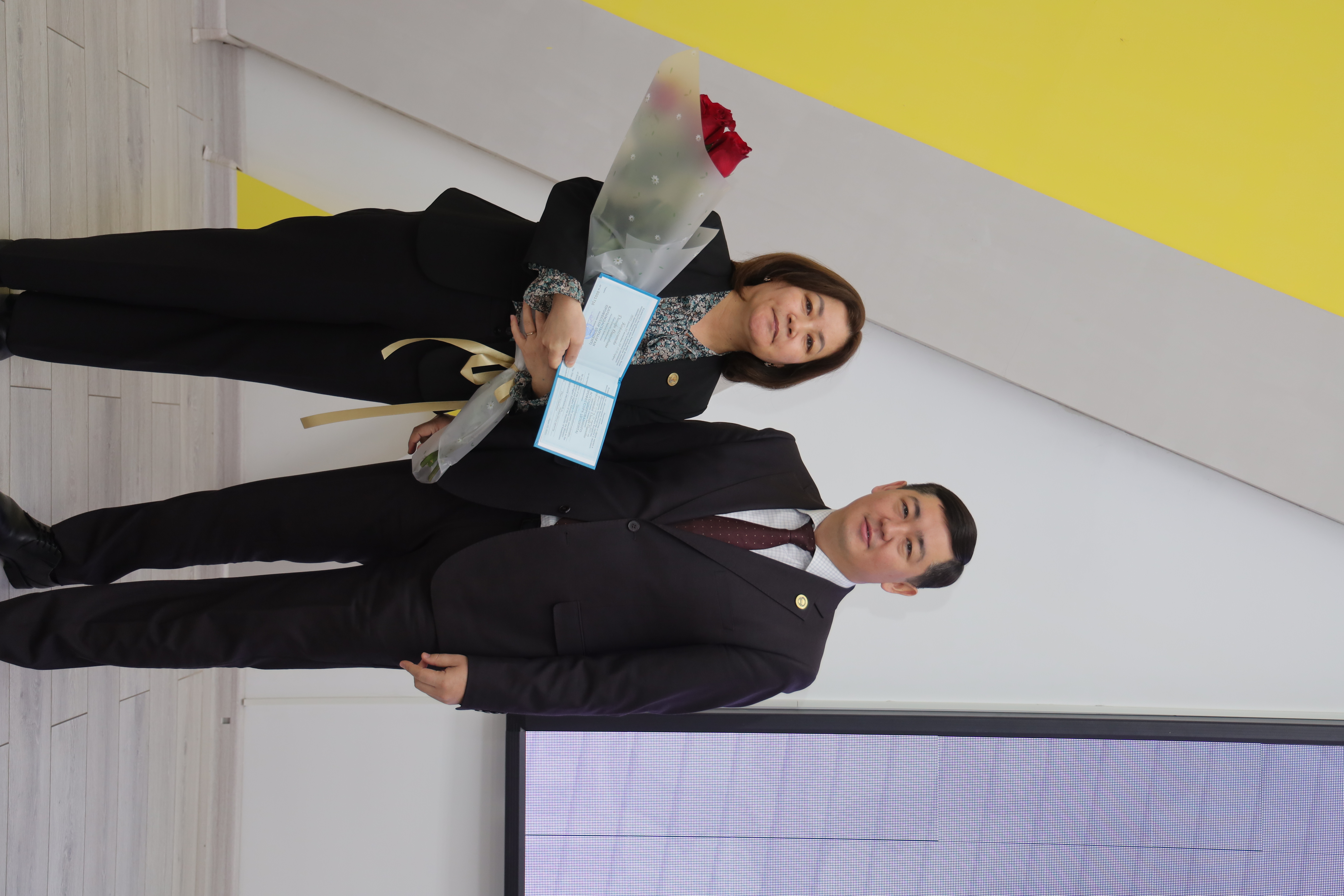
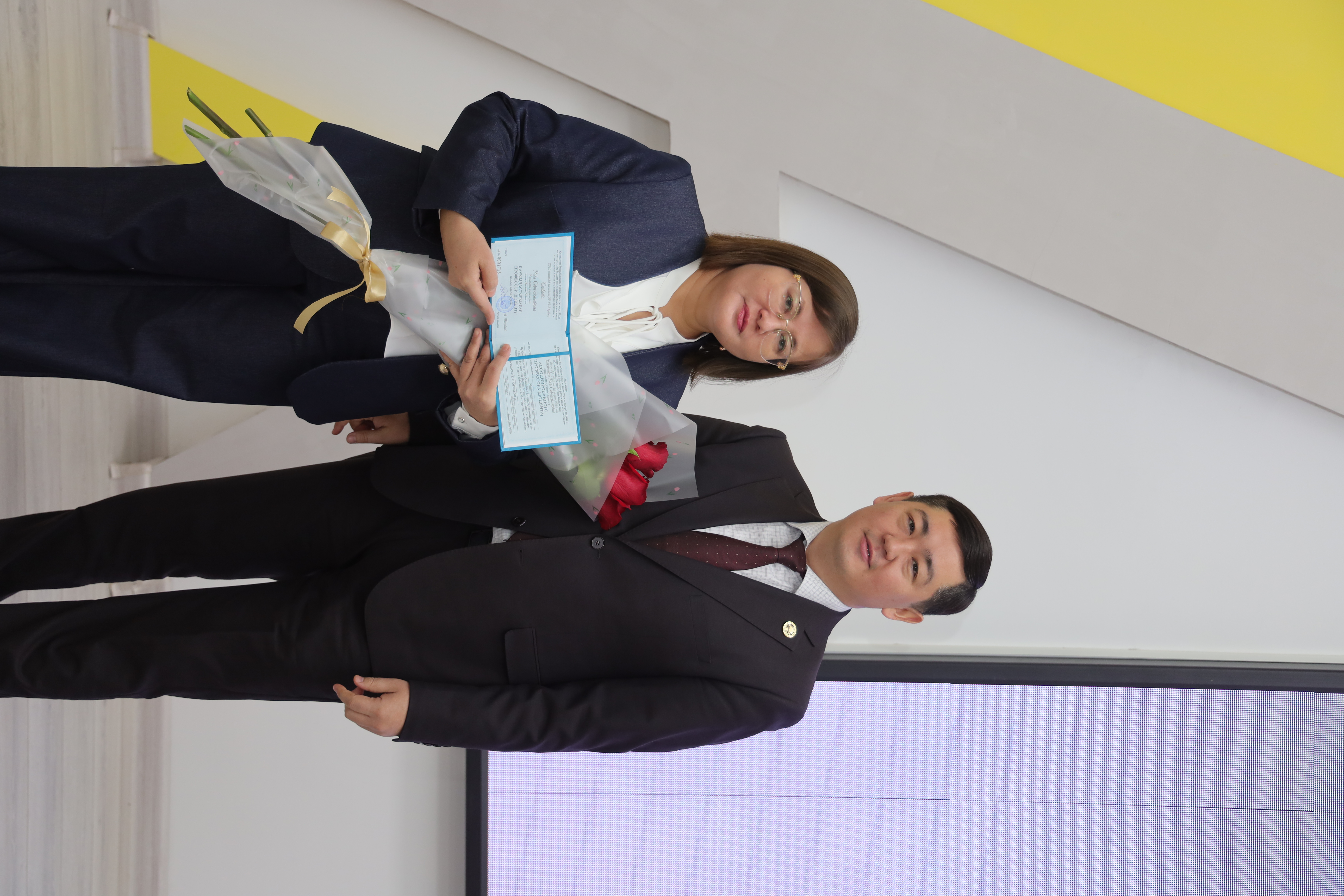
One of the significant moments of the meeting was the awarding of certificates confirming the conferral of the Doctor of Philosophy (PhD) degree and the academic title of Associate Professor to several dedicated faculty members.
Among them:
Ainur Zharkyngyzy Ismailova – Doctor of Philosophy (PhD) in the scientific specialty 8D08201 “Animal Science”.
Kapan Oralgazyuly Shakerkhan – Doctor of Philosophy (PhD) in the scientific specialty 8D06110 “Informatics”.
Araily Alenkhankyzy Zakieva – Associate Professor in the scientific specialty “Agriculture, Forestry, and Fisheries”.
Dinara Oshankankyzy Kozhakhmetova – Associate Professor in the scientific specialty “Multidisciplinary Engineering”.
Roza Serikzhankyzy Bekbayeva – Associate Professor in the scientific specialty “Multidisciplinary Engineering”.
These achievements testify to the growing scientific and pedagogical potential of the university and its success in training highly qualified specialists. Undoubtedly, the newly recognized scholars and professors will contribute to the transfer of knowledge and experience to the younger generation, as well as to advancing scientific research to a new level.
The meeting concluded with the Academic Council defining specific directions for further work. The university staff were wished continued success, along with a call for unity and active involvement in achieving the set goals in the fields of science and education.