
A young scientist at Shakarim University is the hope of Kazakhstani science
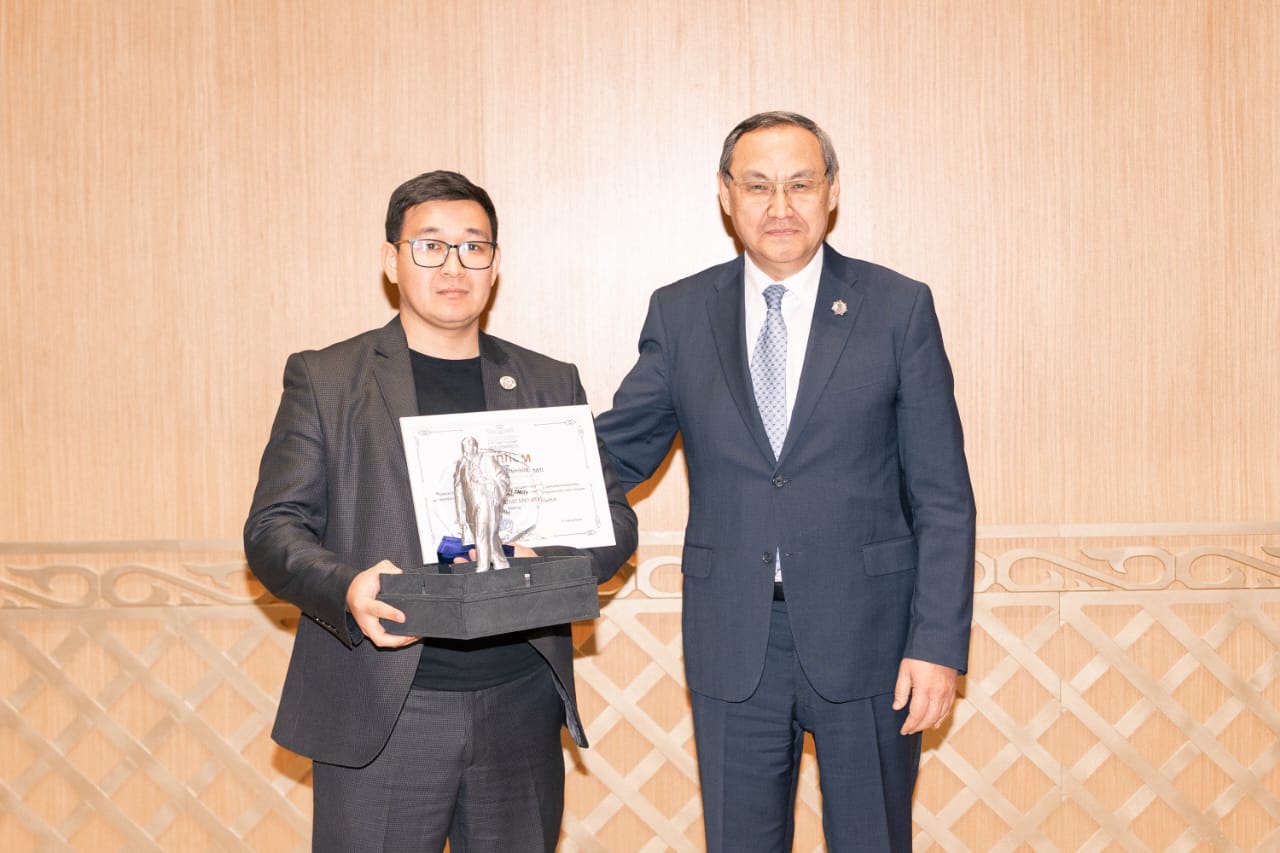
On December 11–12, the II International Congress of Young Scientists of Kazakhstan took place in Almaty. The event was organized by the National Academy of Sciences of the Republic of Kazakhstan under the President of the Republic of Kazakhstan and was dedicated to the UNESCO theme “Trust, transformation and tomorrow: the science needed by 2050.” More than 1,000 young researchers, over 80 foreign scientists from 24 countries, representatives of the scientific diaspora, academicians, deputies and heads of scientific organizations took part in the Congress.
State Counselor Erlan Karin sent congratulations to the participants, noting that science is one of the key priorities of state policy. On behalf of President Kassym-Jomart Tokayev, measures to support young scientists are expanding: funding is increasing, internship programs are being developed and social guarantees are being strengthened. It was also emphasized that almost half of the country’s researchers are scientists under 40 years of age, and the Congress itself has become an important platform for the development of youth science.
The President of the National Academy of Sciences of the Republic of Kazakhstan, Academician Akylbek Kurishbaev made a keynote speech. He expressed gratitude to the Head of State for the support of young scientists and presented an analytical model of the Academy’s work aimed at eliminating systemic gaps and strengthening universities and research institutes. The report presented the results of foresight research: 220 scientific and technical problems and 65 scientific and technical problems, which will become the basis for competitive grant and program-targeted funding.
Among the new initiatives are the foresight and predictive analytical center AI SilkNet, the laboratory of spatiotemporal artificial intelligence and the domestic DeepBas model. The Academy also proposed measures to improve the quality of PhD training, expand access to expensive laboratory equipment and support regional science within the framework of the “Strong Regional Science – Strong Region” program.
At the plenary forum, Nobel laureate, professor at the University of Tussia Riccardo Valentini spoke about global changes and the importance of environmental monitoring. Academician Dorbetkhan Suragan presented the results of the international conference ISAAC 2025. Assistant Professor at the Center for Global Risk Research at Nagasaki University Esbol Sartaev analyzed the place of Kazakhstan in the international scientific agenda. Scientists from China, Turkey, Great Britain and other countries shared the latest developments in their fields.
Five major scientific conferences were held on the basis of leading universities in Almaty in the following areas: natural sciences, space and communications, agrobioresources, health, education and civil society. The foresight session “Science Needed by Kazakhstan by 2050” outlined the key trajectories of future scientific research.
Congress sections covered the most relevant areas of modern science: natural science, space, artificial intelligence, agricultural technology, biomedicine, ecology, education and social development. Master classes, workshops, consultations on grants and publications, as well as an exhibition of innovative projects of young scientists were organized.
During the presentation of the “Academy Most Cited Researcher Award”, recognizing young Kazakhstani scientists based on the Web of Science, a young researcher at Shakarim University, PhD, head of the Shakarim Lab design bureau, Adilet Mukhituly Sugirbay, was awarded a special award from the National Academy of Sciences - “The Hope of Kazakh Science.”
This is a high assessment of his contribution to agricultural automation, a large number of citations in international journals and high scores in the Scopus database.
Scientific achievements of the scientist:
33 scientific articles published in international peer-reviewed journals;
H-index according to Scopus - 13;
in the list of 1000 best scientists of Kazakhstan - 513th place;
graduate of Northwestern Agricultural and Forestry University (NWAFU, China), where he subsequently completed postdoctoral studies;
successfully completed courses in the commercialization of scientific developments at Rutgers University (USA);
main areas of research: agricultural automation, organic farming, DEM modeling, creation of intelligent agricultural machines.
The II International Congress of Young Scientists became a clear confirmation that the scientific potential of Kazakhstan is growing rapidly.
And young researchers like Adilet Sugirbay are a new generation of leaders capable of promoting domestic science forward and worthy of representing the country on the world stage.